RoboSub 2026 Competition Log
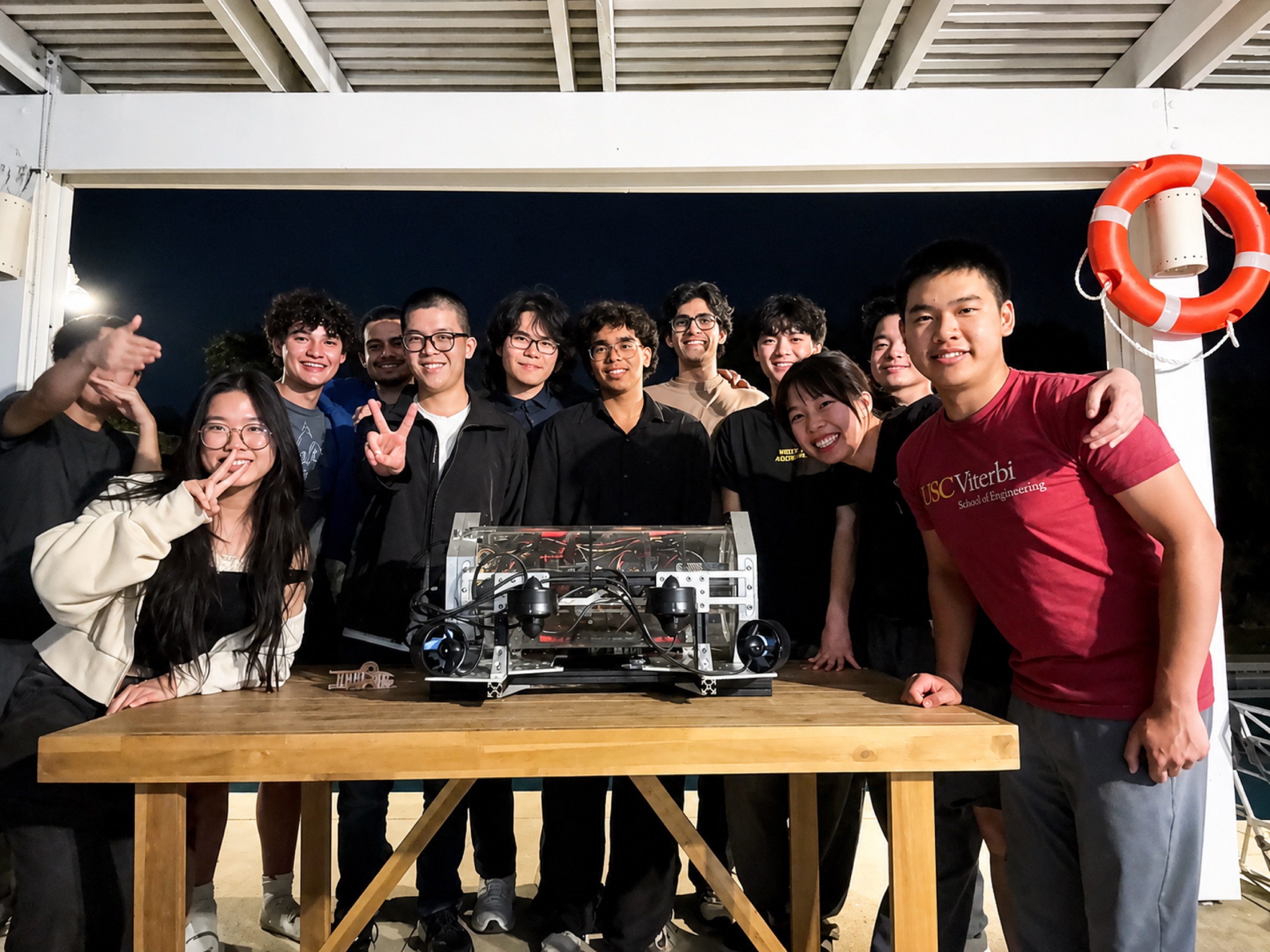
Five days at the Woollett Aquatics Center in Irvine became the culmination of an entire year of work. RoboSub isn't just about the final score, it's about how quickly a team can learn, adapt, and improve under pressure. Every issue we encountered became another opportunity to grow, and every successful run was built on countless hours of testing before we ever arrived in Irvine. This competition wasn't defined by a single autonomous run. It was defined by our team's ability to diagnose problems, make engineering decisions on the pool deck, and come back stronger each time Barracuda entered the water.
“The biggest lesson from RoboSub wasn't that everything worked. It was that every setback became another engineering problem we learned how to solve together.”
Day 1: Arrival & Preparing for Competition
After driving down to Irvine, the team completed registration and settled into the competition schedule. While the official events had only just begun, everyone knew the real work would happen in the water. We headed to the practice pool for our first testing session.
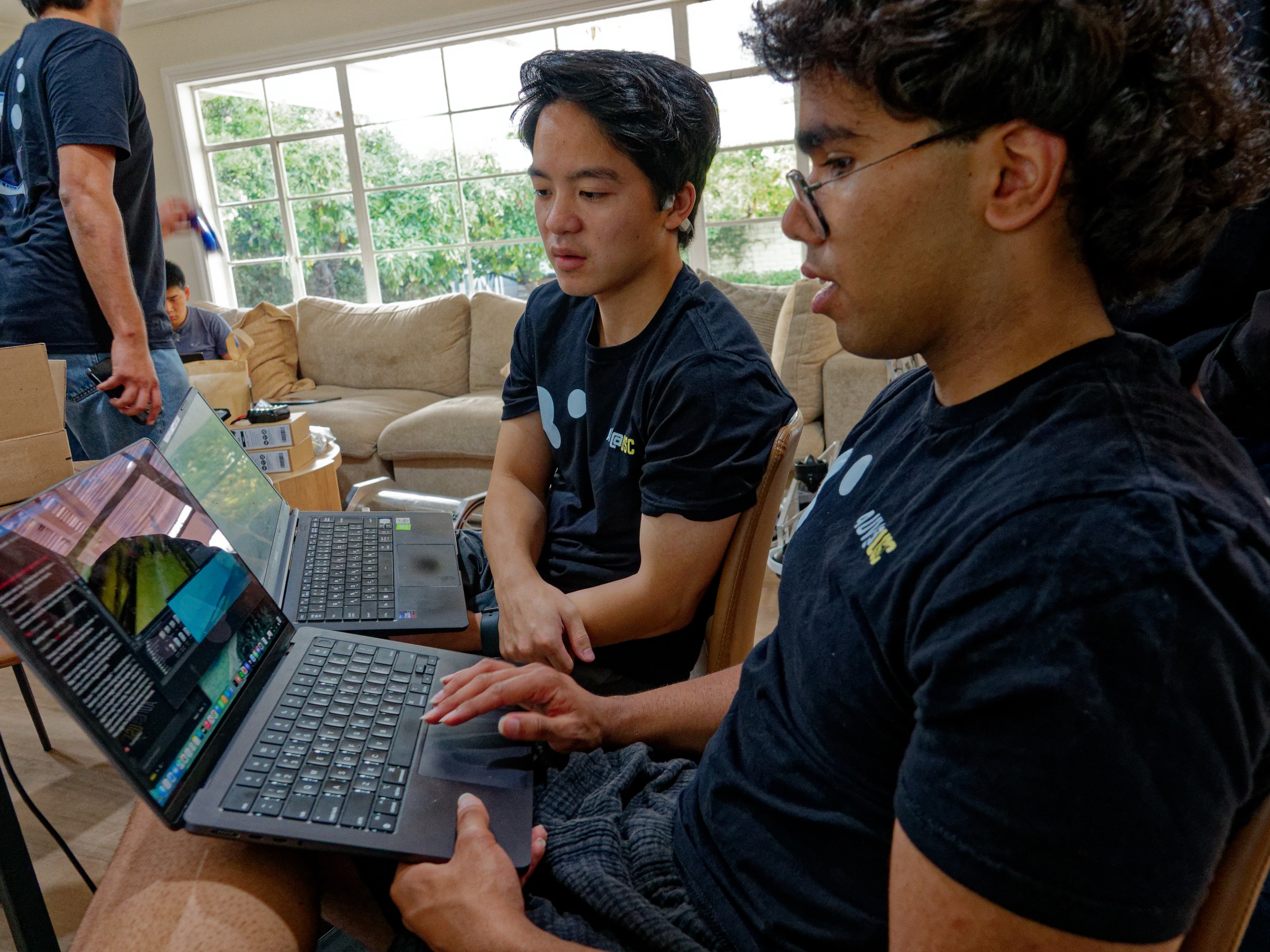
Transporting an AUV always introduces uncertainty. Before our first official run we verified every critical subsystem: electrical systems, watertight seals, thrusters, controls, and sensors.
We hadn't gone to the competition site yet, so this first day was entirely at the practice pool, where we began adapting Barracuda to unfamiliar water that behaved very differently from the pool we had trained in throughout the spring. It set the tone for the week: long nights, constant iteration, and making every minute in the water count.
Day 2: Presentations, Iteration & a 3 A.M. Breakthrough
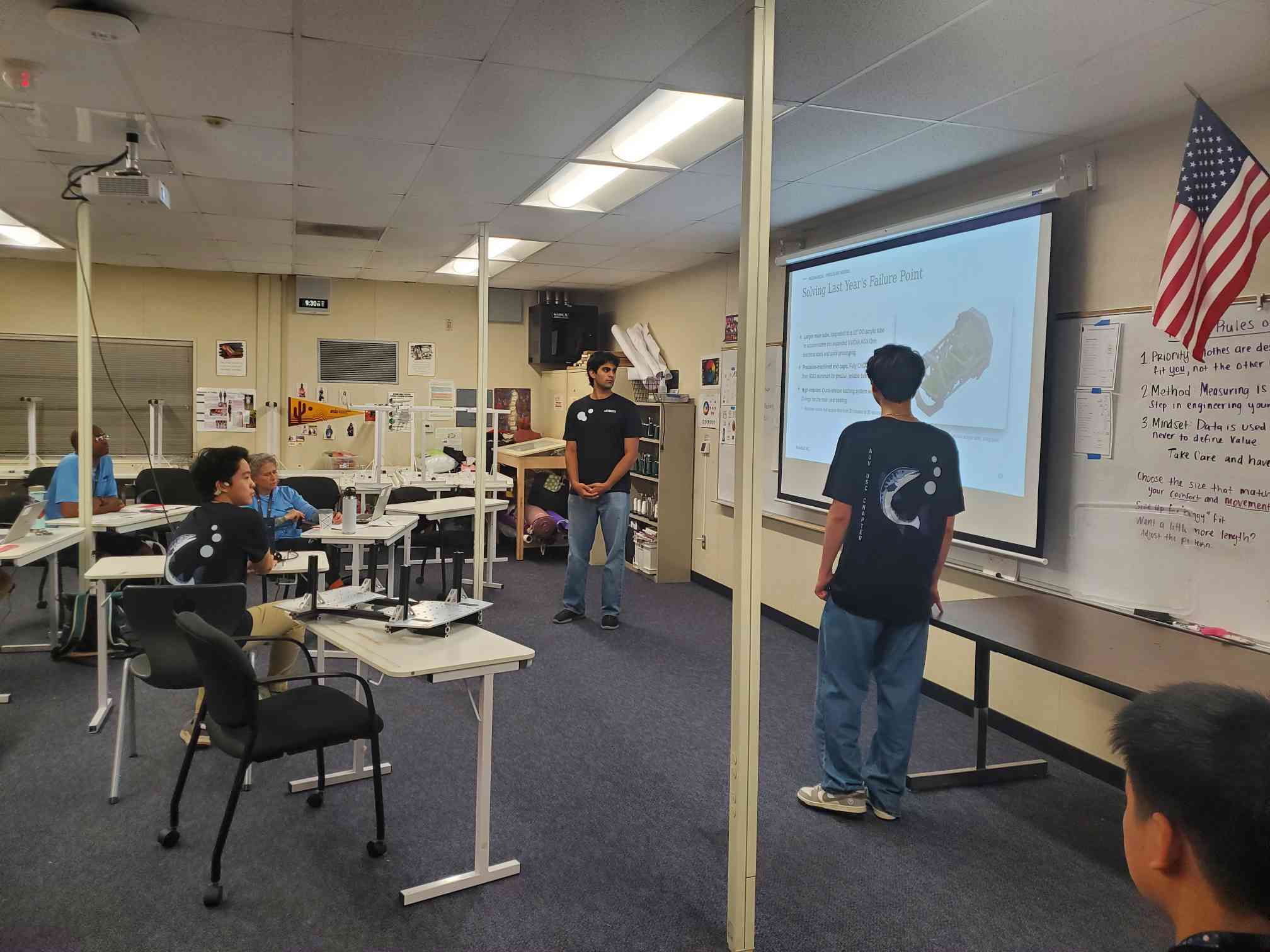
The morning began with our technical presentation and design assessment. Ek, Taka, and Heuy presented Barracuda's mechanical design, software architecture, and engineering decisions to the judges. We received encouraging feedback that validated many of the improvements the team had spent months developing.
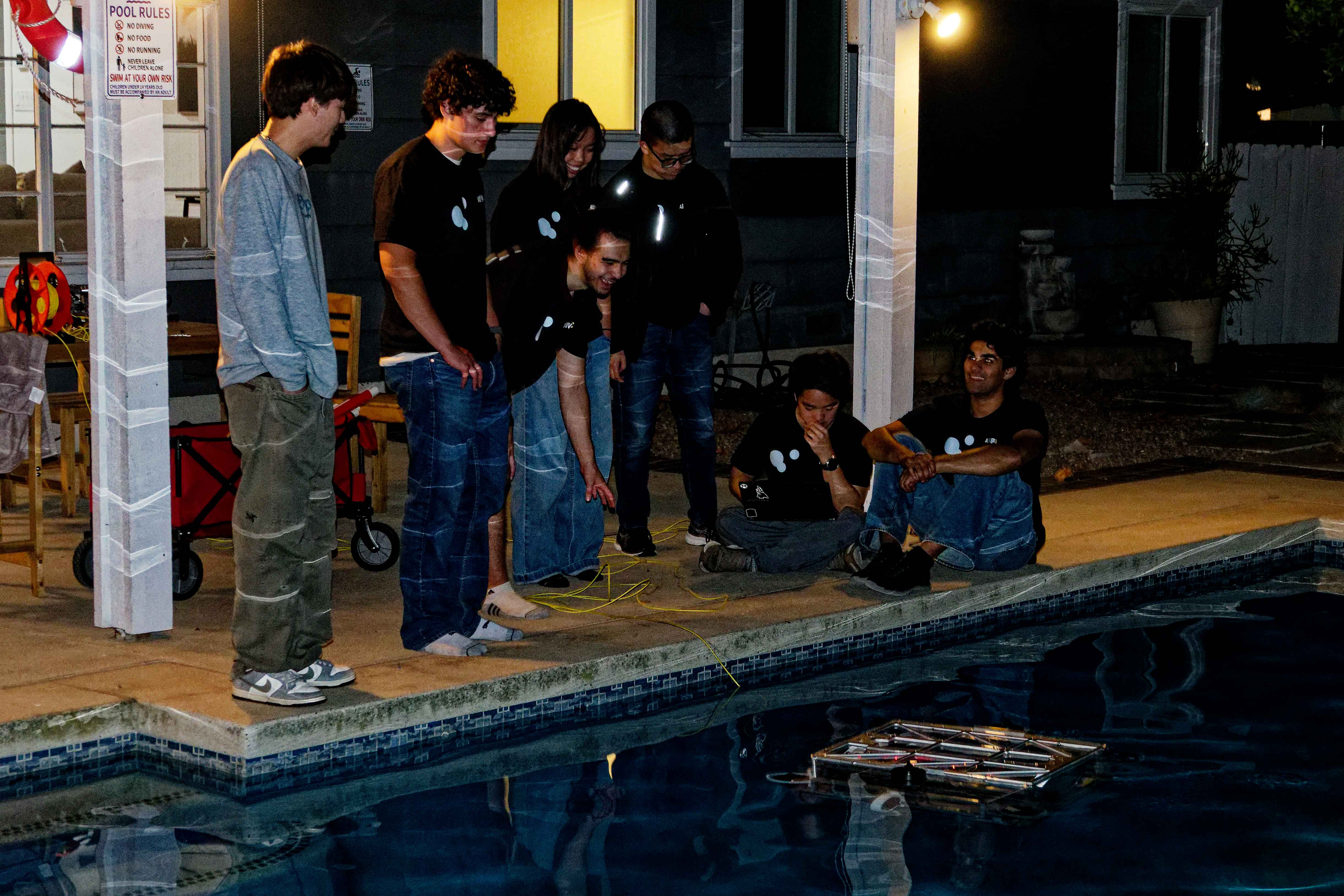
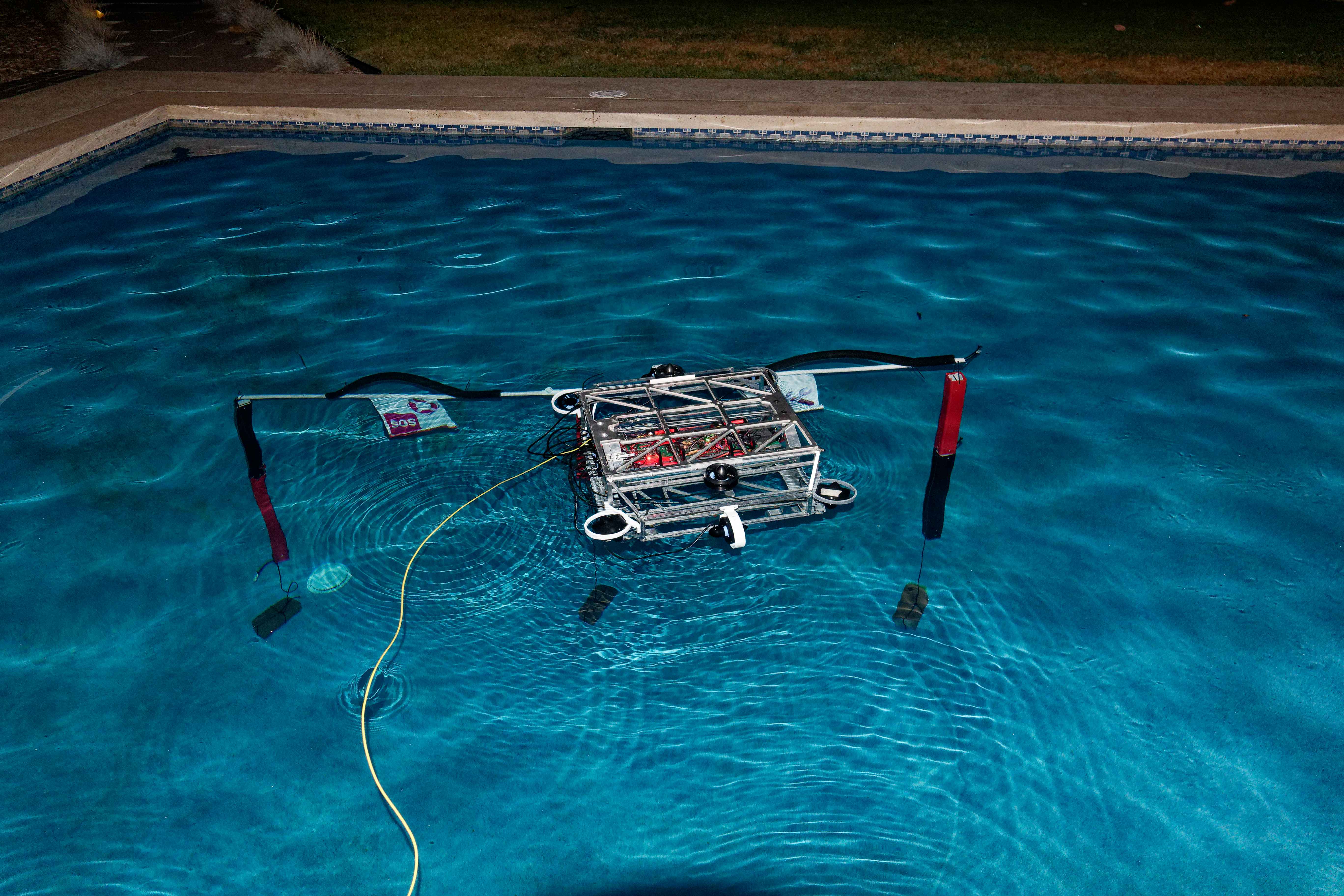
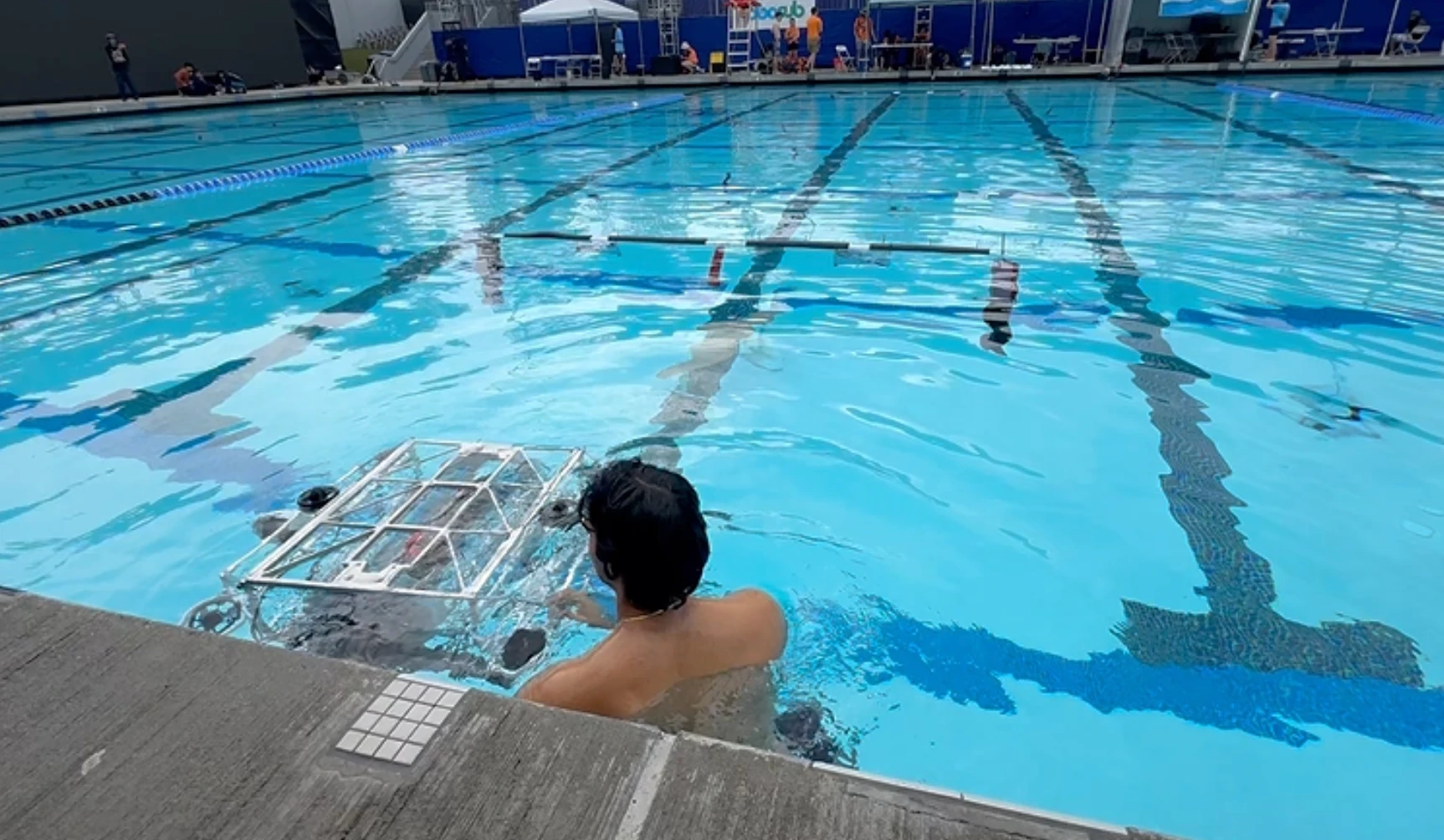
Afterward, everyone moved to the competition pool for the first time, and it behaved very differently from the water we had trained in throughout the spring. Our first tests at the competition site quickly revealed several problems: Barracuda consistently drifted to the right, making autonomous navigation unreliable, and we struggled with depth control and vehicle speed, preventing consistent gate passes.
Instead of becoming discouraged, the team immediately split into troubleshooting groups. The software team analyzed logs between every run while the mechanical team adjusted ballast and weight distribution to improve stability. Every run generated more data; every adjustment improved the vehicle.
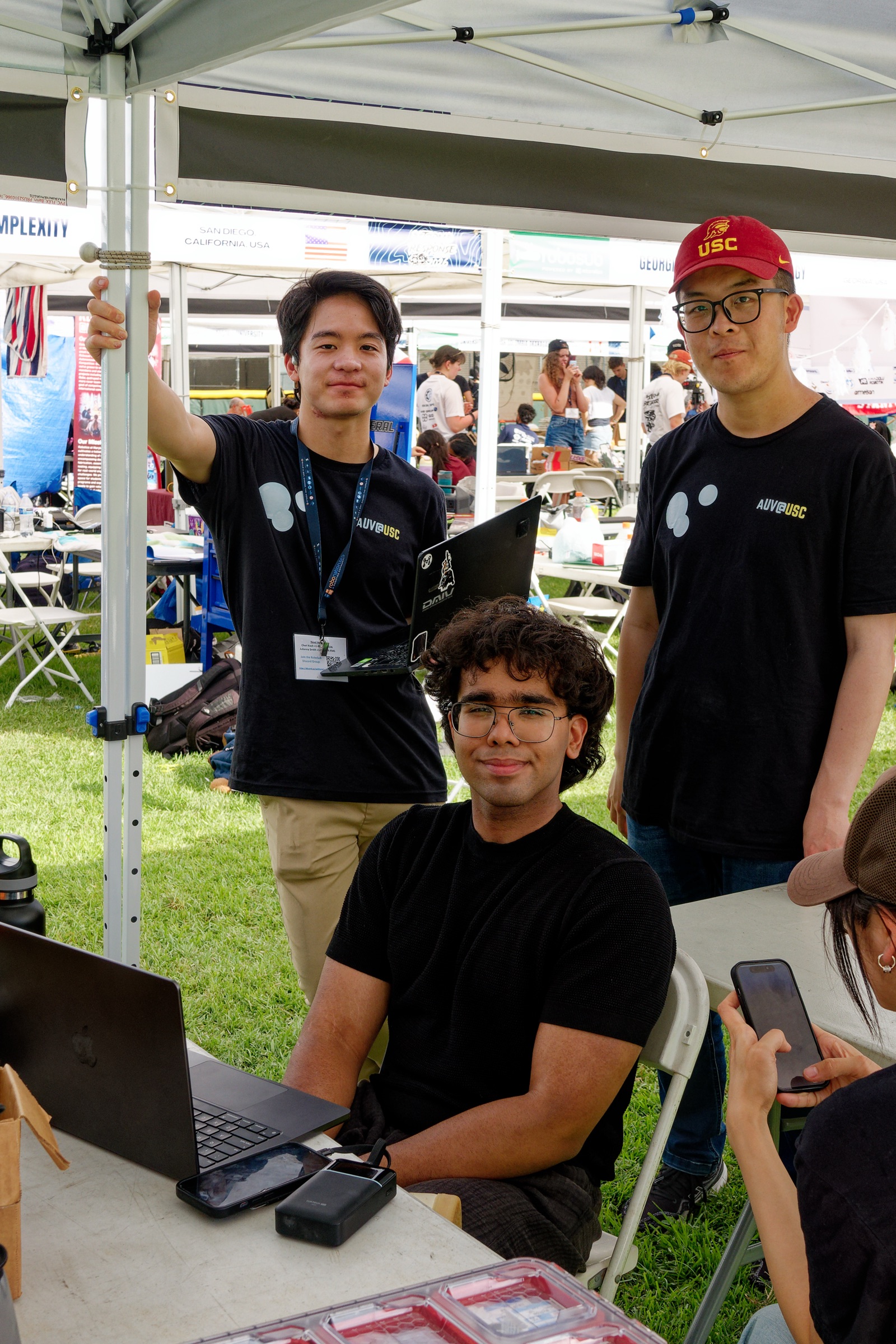
Testing continued long after most teams had packed up. We stayed in the pool until nearly 3:00 AM, continuously refining the vehicle and repeating autonomous runs. By the end of the night, Barracuda passed through the gate multiple times, and these were our first fully autonomous gate runs with the tether completely disconnected, relying only on the wireless kill switch. It was a milestone we had been working toward all season.
Day 3: Qualifying, Unexpected Challenges & Teamwork
Competition morning began with the qualifying draw, but we quickly discovered an unexpected requirement: disconnecting the tether wasn't sufficient. Competition rules required the tether to be removed entirely from the vehicle, meaning we suddenly needed a T10 enclosure that we had not prepared.
RoboSub once again demonstrated its collaborative spirit. Thanks to Team Washington State University, who generously lent us a replacement enclosure, we were able to continue competing without losing valuable time.
Our first qualifying run still wasn't successful, Barracuda struggled to maintain depth, making autonomous navigation unreliable. Back on deck, the team reviewed the logs and identified the culprit: the DVL had become misaligned, resulting in inaccurate navigation estimates. After recalibrating the sensor and making adjustments, we returned to the pool that afternoon. Once again, the team met the setback with resilience rather than frustration, treating a failed run as the next problem to solve, not a reason to quit.
After that morning run, we went back to simulation to keep debugging. Although we never got to try the slalom and other mission tasks in a real water test, the software team was able to complete and validate that code by running it in NVIDIA Isaac Sim, where we test autonomy and mission logic before ever touching the water.
The improvement was immediate. Barracuda completed one of its strongest autonomous runs of the competition, passing cleanly through the gate and showing how much progress had been made in only a few hours. The gap between the morning and afternoon runs captured exactly what RoboSub is about: rapid engineering iteration under pressure.
Overnight Rebuild: Reinventing Barracuda
Qualifying also set up a larger engineering challenge. From the beginning, we had planned to move Barracuda onto a lighter frame for better yaw maneuverability, and the competition became the moment to finally execute that change.
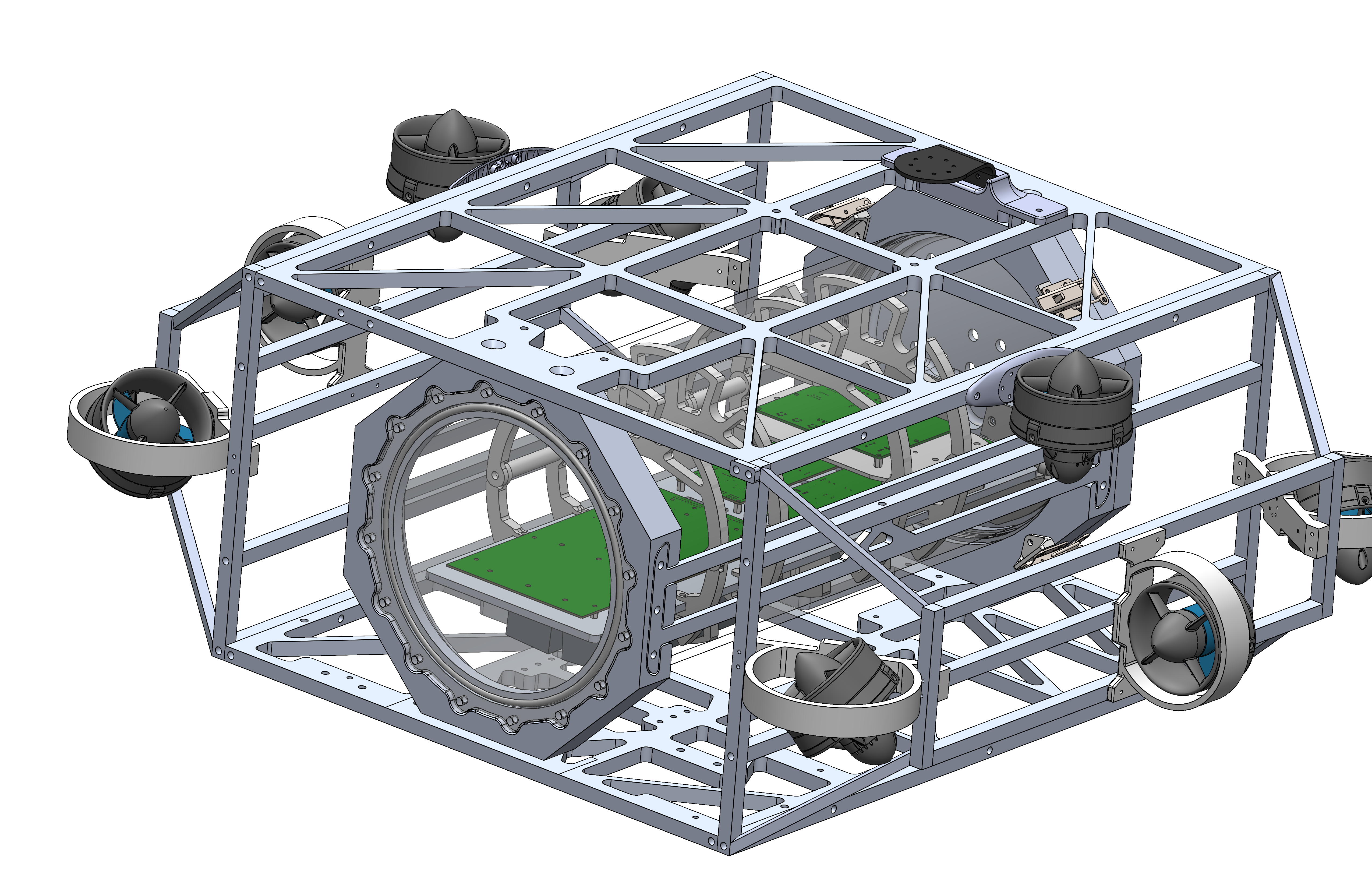
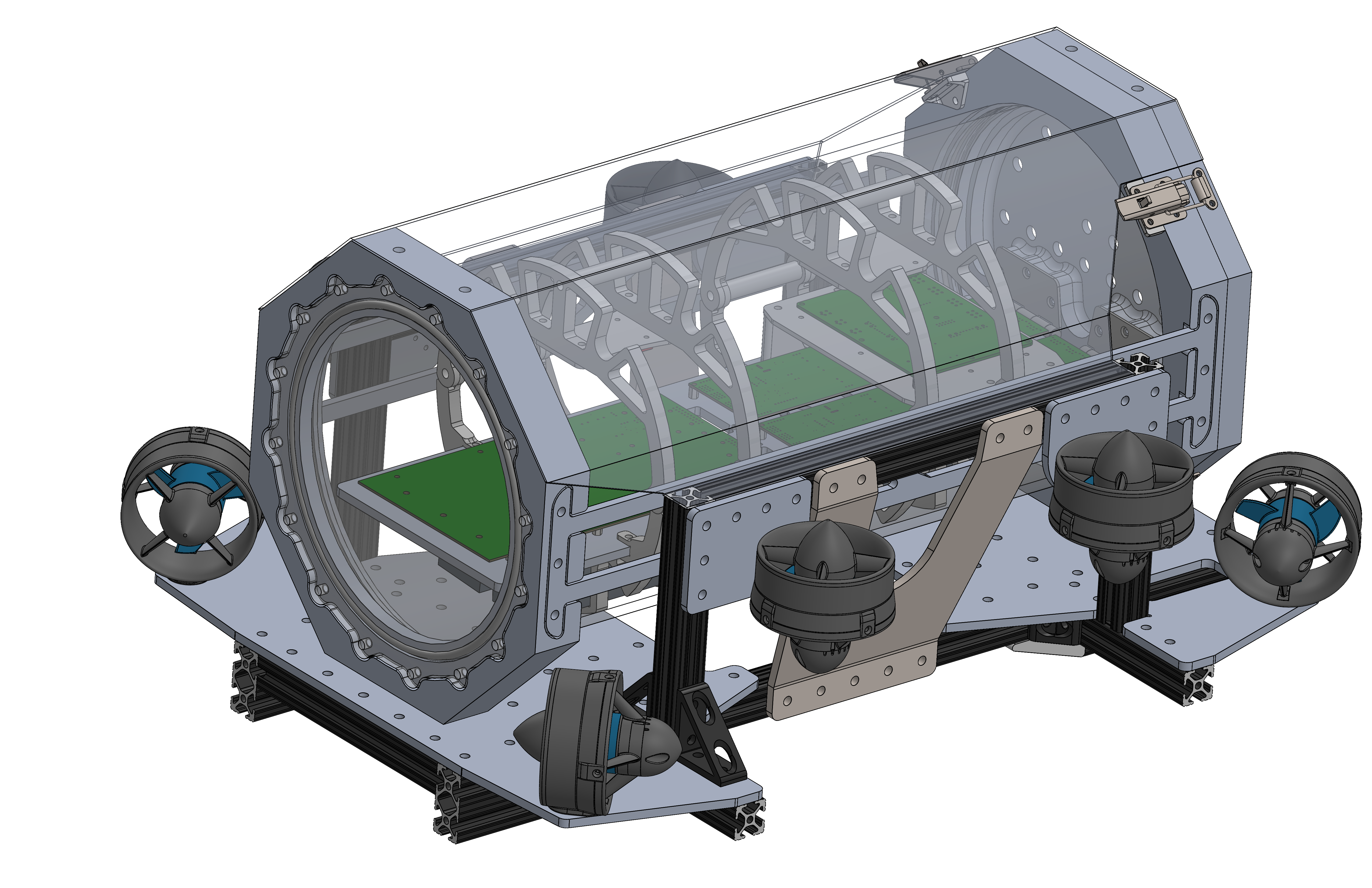
Rather than settling for incremental improvements, the team committed to rebuilding Barracuda during the competition, exactly as we had intended.
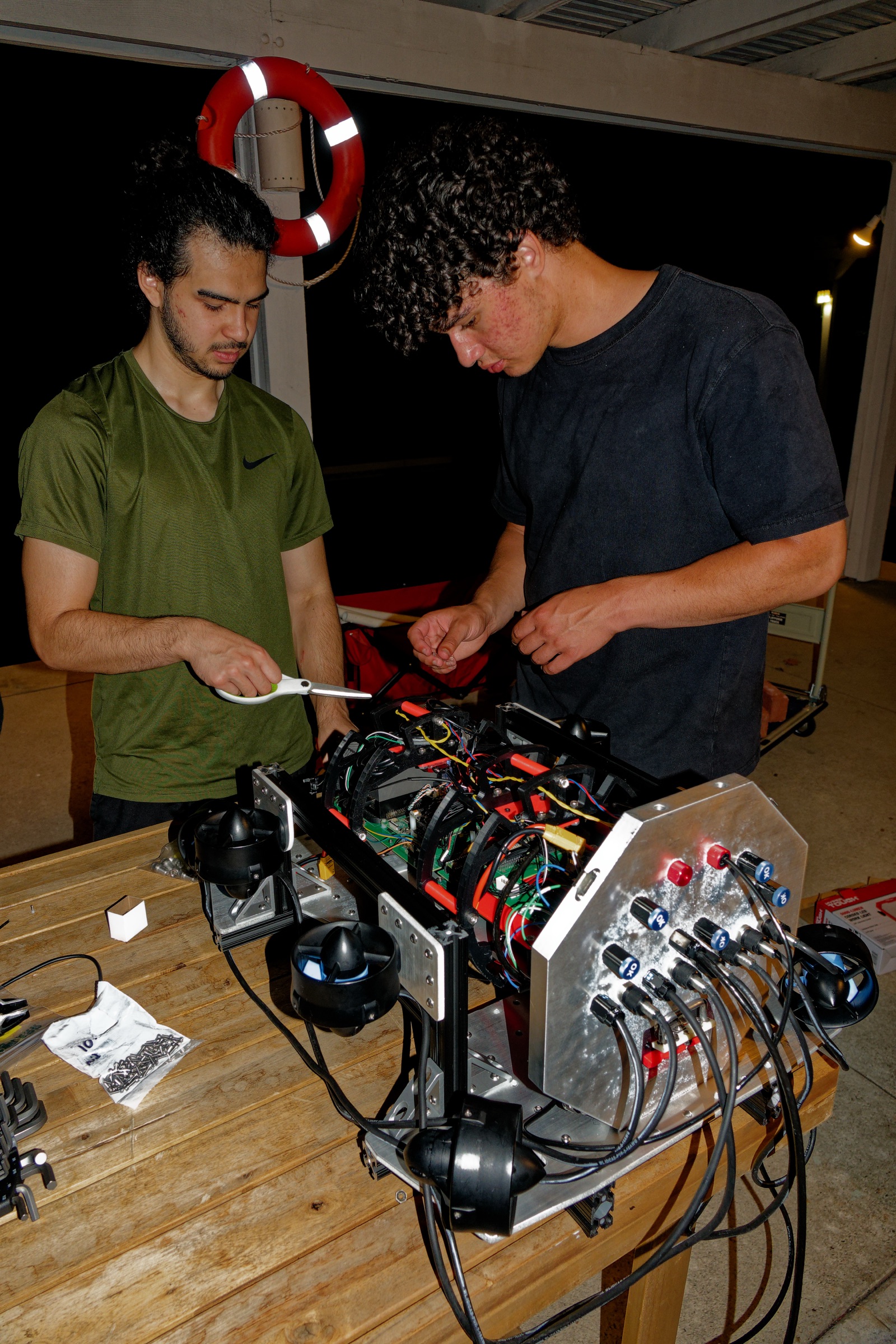
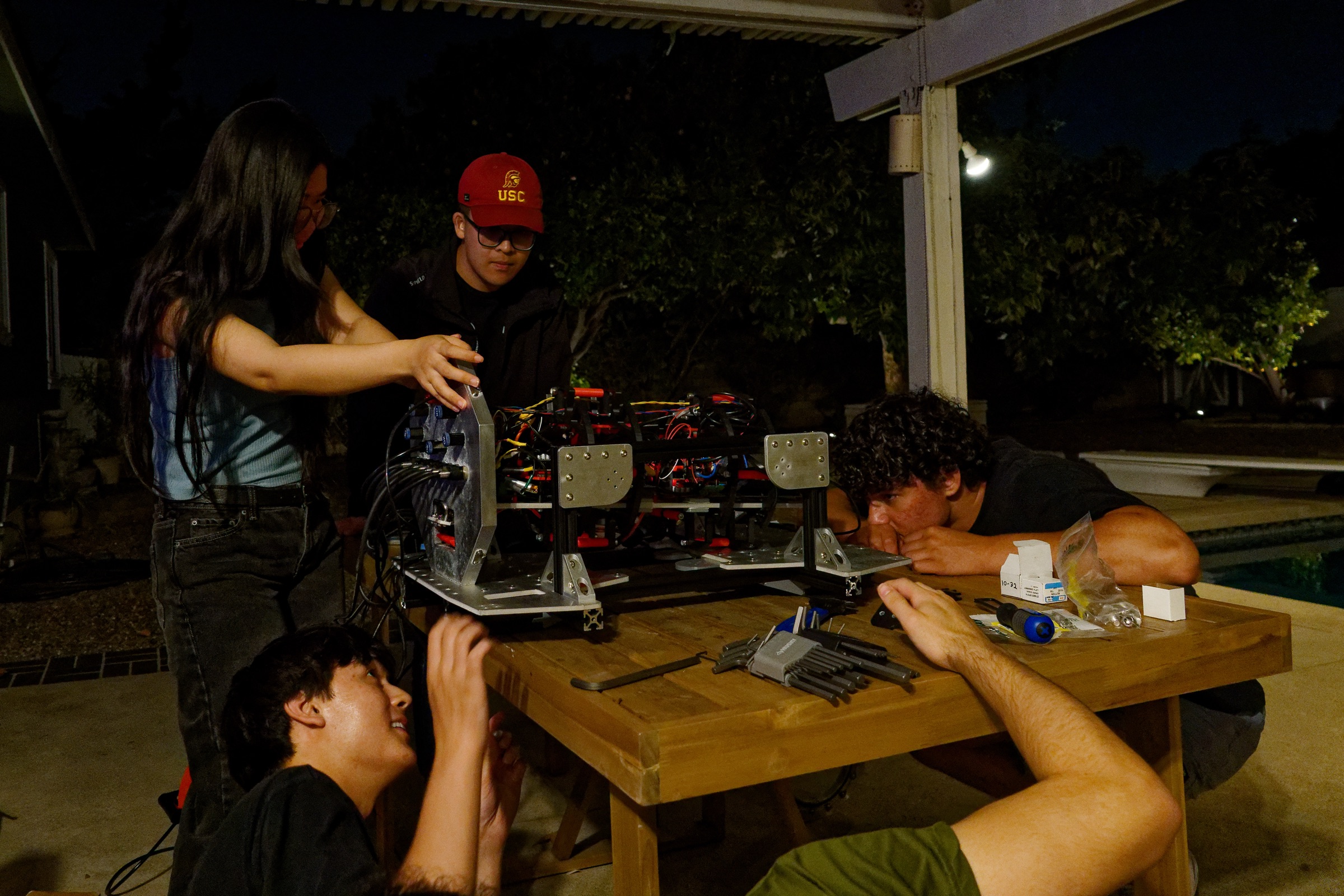
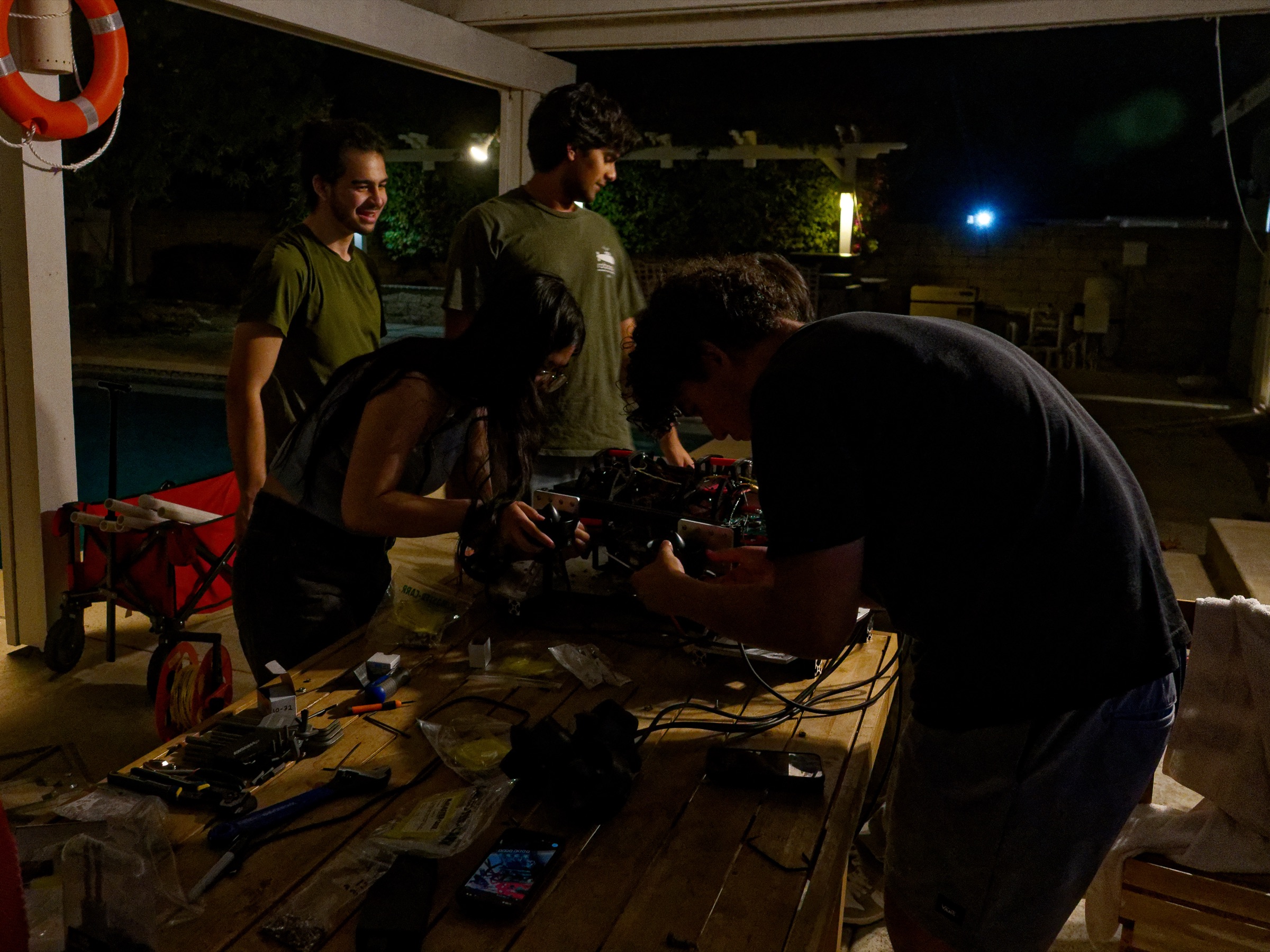
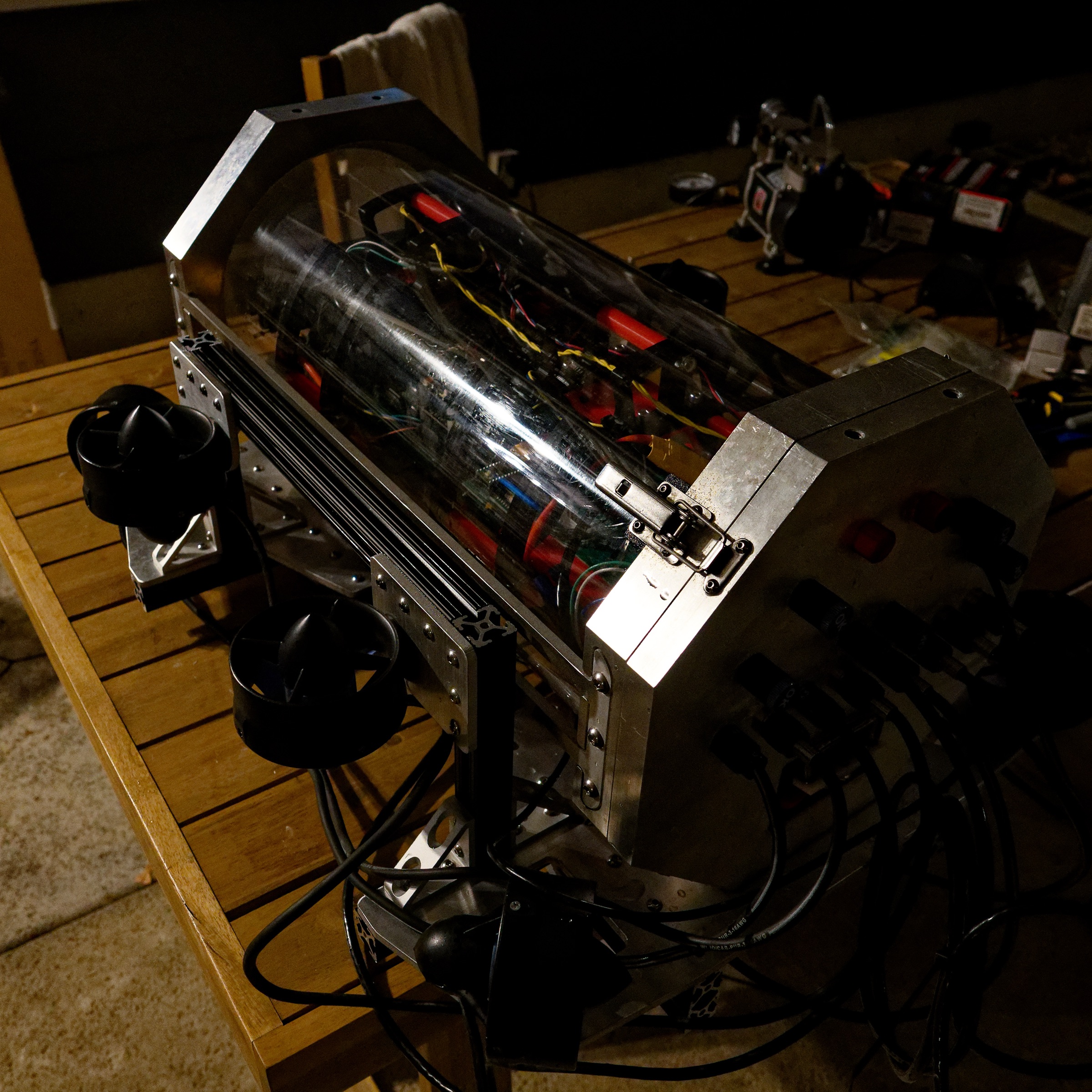
The mechanical team worked through the night, completely disassembling the vehicle and rebuilding it around a lighter frame. Components were transferred, wiring reorganized, buoyancy recalculated, and the entire vehicle reassembled under an incredibly tight deadline.
The software team was equally busy. The redesigned vehicle required updated parameters throughout the software stack, controllers were retuned, configuration files updated, and the mission framework reconfigured to match the new platform, while additional autonomous mission capabilities were integrated for tasks beyond the gate. By the following morning, an entirely new version of Barracuda was ready.
Final Day: A New Barracuda Takes the Water
The final day marked the first in-pool test of Barracuda 2.0, our rebuilt vehicle, and the results immediately justified the overnight effort. Barracuda 2.0 achieved the expected buoyancy, remained stable throughout the run, and completed an autonomous gate pass during its very first pool test.
Watching a vehicle that had existed only as a collection of individual components hours earlier navigate successfully through the course was one of the most rewarding moments of the entire competition. Although our RoboSub journey ended there, the experience reinforced one of the team's greatest strengths: our willingness to adapt, rebuild, and keep improving even under extreme time pressure.
Looking Ahead
Reaching the Autonomy Challenge Semi-Finals was only one measure of success. The real achievement was watching Barracuda, and our team, grow throughout the week. We learned to diagnose failures quickly under competition pressure, coordinate software and hardware development efficiently, adapt to unexpected competition requirements, validate engineering decisions with real-world testing, and trust the engineering process built over months of pool work.
Every successful run was built on dozens of unsuccessful ones. Perhaps the greatest lesson was realizing that nearly every challenge we encountered had already appeared during our spring testing, because we had seen these problems before, we knew how to investigate them instead of panicking.
As we look toward RoboSub 2027, we're taking home far more than a competition result: a lighter and more capable Barracuda, a stronger software stack, a more experienced engineering team, and a deeper understanding of what it takes to build an AUV that can compete at the highest level. We'll be back next year.